
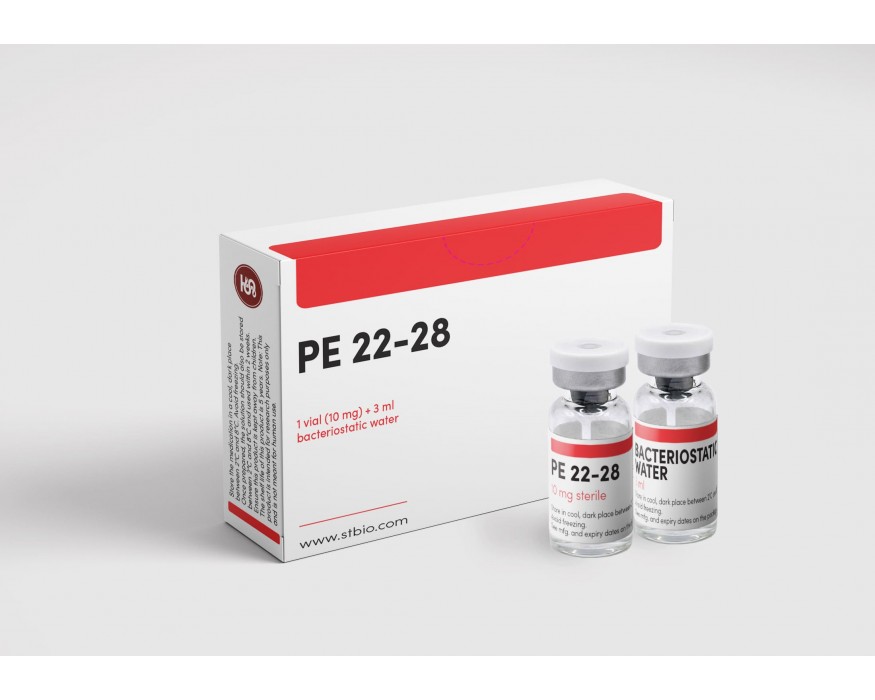
What is PE-22-28?
PE-22-28 is a synthetic derivative of the naturally occurring peptide spadin. It belongs to a revolutionary class of antidepressant compounds that target potassium channels rather than traditional monoamine transporters. Specifically, scientists designed this seven-amino acid sequence to act as a potent antagonist of the TREK-1 channel. Unlike standard treatments that take weeks to show results, PE-22-28 demonstrates activity within days. Consequently, researchers in the UK, USA, and Australia utilize the peptide to study accelerated recovery from mood disorders.
Mechanism: TREK-1 Inhibition and Synaptic Plasticity
The primary function of PE-22-28 is to block the TREK-1 potassium channel found in high concentrations within the hippocampus. By inhibiting these channels, the peptide increases the excitability of neurons and enhances synaptic transmission. This process triggers a cascade of intracellular signals that promote the release of brain-derived neurotrophic factor (BDNF). Therefore, it serves as a critical tool in Germany and France for investigating how rapid molecular changes can reverse the structural damage caused by chronic stress.
Breakthroughs in Rapid-Acting Antidepressants PE-22-28 Peptide
The most significant research application for PE-22-28 involves its role as a “fast-acting” antidepressant model. Traditional SSRIs often require long adjustment periods to alter gene expression. In contrast, PE-22-28 produces significant behavioral changes in experimental models within four days. Scientific studies in the USA and Spain indicate that the peptide effectively bypasses the typical delay in therapeutic onset. Thus, it remains a high-priority compound for exploring the next generation of psychiatric interventions in Australia and the UK.
Neurogenesis and Hippocampal Health
Researchers often observe a marked increase in neurogenesis when studying PE-22-28. The peptide stimulates the birth of new neurons in the dentate gyrus, a brain region vital for emotional regulation and memory. By restoring the volume of the hippocampus, PE-22-28 helps mitigate the biological markers of depression. Moreover, the peptide helps protect existing neurons from oxidative damage and inflammation. Consequently, biotech firms in Spain and Germany prioritize it for research into cognitive resilience and the prevention of stress-induced neural atrophy.
Quality Standards and Laboratory Handling
Professional laboratories in the UK, France, and Germany require maximum chemical purity for reproducible data. High-quality PE-22-28 usually arrives in a lyophilized state with a purity of 98% or higher. You must store the vial in a freezer at -20°C to ensure long-term molecular stability. After you reconstitute it with sterile water or a physiological saline solution, keep it refrigerated. Handle the vial gently to preserve the delicate peptide structure. These strict protocols guarantee accurate results for your neuroscience and behavioral science studies.



Reviews
There are no reviews yet.