
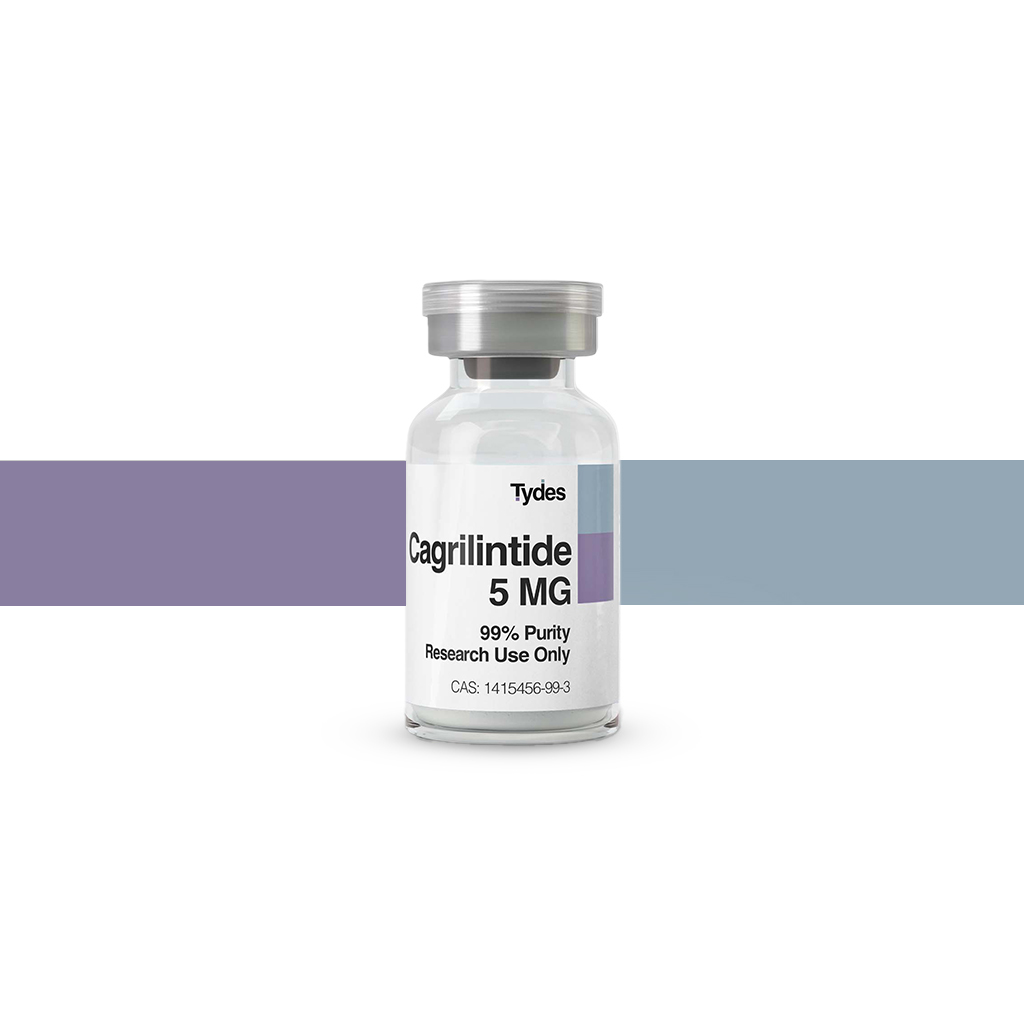
What is Cagrilintide (CGL/Cag)?
Cagrilintide Peptide, known in research circles as CGL or Cag, is a synthetic, long-acting analogue of the human hormone amylin. Amylin is naturally co-secreted with insulin by pancreatic beta cells and plays a critical role in regulating post-prandial glucose levels and satiety. Unlike native amylin, which has a very short half-life, Cagrilintide is engineered with specific modifications to its amino acid sequence—including the addition of a fatty acid side chain—to allow for weekly administration. Consequently, researchers in the UK, USA, and Australia focus on this peptide for its sustained ability to modulate appetite and metabolic rate.
Mechanism: Amylin Receptor Agonism
Cagrilintide functions as a potent agonist of the amylin receptors (AMYR) and the calcitonin receptors (CTR). By binding to these receptors in the area postrema of the brain, it triggers a powerful “fullness” signal that reduces food intake. Unlike GLP-1 agonists that primarily slow gastric emptying, amylin analogues like Cagrilintide act directly on the brain’s homeostatic and hedonic reward systems to lower the “set point” for body weight. Therefore, it is a primary subject in Germany and France for studies investigating the neural pathways of chronic obesity.
Synergy with GLP-1 Agonists Of Cagrilintide Peptide
One of the most clinically significant areas of research involves the synergy between Cagrilintide and GLP-1 receptor agonists (such as Semaglutide). Studies conducted in the USA and Spain indicate that when these two classes of peptides are used together, they produce weight reduction results that significantly exceed the efficacy of either compound alone. This “dual-action” approach addresses multiple hunger pathways simultaneously—slowing digestion while also silencing central hunger signals. Consequently, it is a high-priority asset for biotech firms in Australia and the UK exploring the next generation of metabolic therapies.
Impact on Glucose Control and Glucagon
Beyond weight management, Cagrilintide offers robust benefits for glucose homeostasis. It works by inhibiting the inappropriate secretion of glucagon, the hormone responsible for raising blood sugar levels. By suppressing glucagon after meals, the peptide helps prevent glucose spikes and reduces the overall metabolic burden on the pancreas. Researchers in Germany and France often utilize the compound to study how amylin analogues can stabilize glycemic variability in models of insulin resistance and metabolic syndrome.
Sourcing and Laboratory Standards in the UK
To maintain the integrity of longitudinal research, sourcing Cagrilintide with high chemical purity is essential. Professional-grade vials typically contain lyophilized powder verified by HPLC to be at least 98% pure. Because of its long-acting nature, the molecular structure must be protected from heat; therefore, vials should be stored in a refrigerated environment between 2°C and 8°C. Once reconstituted with bacteriostatic water, the solution remains stable for several weeks if kept cool. Following these strict protocols ensures that researchers in Spain, France, and the UK can accurately observe the long-term metabolic shifts induced by the peptide.

Reviews
There are no reviews yet.