
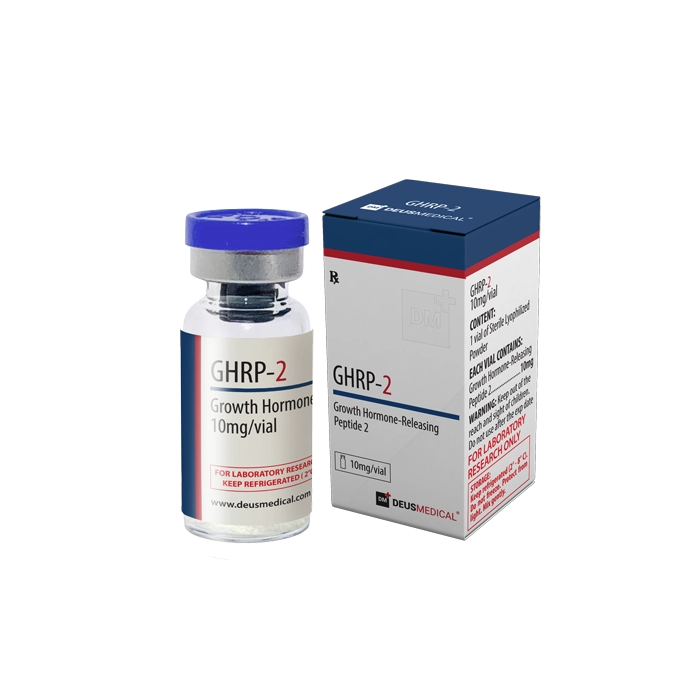
What is GHRP-2 (GR2)?
GHRP-2 (Growth Hormone Releasing Peptide-2), also known as Pralmorelin, is a synthetic second-generation growth hormone-releasing peptide. It belongs to the category of growth hormone secretagogues (GHS) and is a potent agonist of the ghrelin receptor. Consequently, researchers in the UK, USA, and Australia study GHRP-2 for its highly efficient ability to stimulate the endogenous release of somatotropin (GH). Unlike first-generation peptides, GHRP-2 is significantly more potent and has a shorter half-life, allowing for precise control over growth hormone pulses. This molecule serves as a primary tool for investigating pituitary function and the biological mechanisms of systemic growth.
Mechanism: Ghrelin Receptor Agonism and Pituitary Signaling
GHRP-2 functions primarily by binding to the Growth Hormone Secretagogue Receptor (GHS-R1a), commonly known as the ghrelin receptor. This binding occurs both in the hypothalamus and the anterior pituitary gland. Once activated, it triggers a strong, pulsatile release of natural growth hormone while simultaneously inhibiting somatostatin, the hormone responsible for stopping GH release. Furthermore, because it mimics ghrelin, the peptide can also stimulate the hunger centers of the brain. Therefore, it serves as a critical tool in Germany and Canada for investigating metabolic signaling. This precise molecular action helps researchers observe the elevation of IGF-1 levels in various laboratory models.
Breakthroughs in Muscle Repair and Appetite Stimulation With GHRP-2 (Growth Hormone Releasing Peptide-2)
The most significant research application for GHRP-2 involves its impact on nitrogen retention and lean tissue preservation. Scientific studies in the USA and Spain indicate that the peptide promotes the repair of tendons, ligaments, and muscle fibers by accelerating protein synthesis. Researchers also observe its utility in treating sarcopenia and age-related muscle wasting. Additionally, due to its influence on appetite, it is a high-priority compound for studying cachexia and eating disorders. This dual-action approach makes it essential for laboratories exploring regenerative medicine. Thus, it remains a primary focus for endocrine research in Italy.
Comparison: GHRP-2 vs. GHRP-6 vs. Ipamorelin
Quality Standards and Laboratory Handling
Professional laboratories in Italy, Germany, and the UK require maximum chemical purity for valid experimental data. High-quality GHRP-2 usually arrives in a lyophilized state with a purity of 98% or higher. You must store the vial in a freezer at -20°C to ensure long-term molecular stability. After you reconstitute it with bacteriostatic water or specialized sterile saline, keep the solution refrigerated between 2°C and 8°C. Handle the vial gently; avoid vigorous shaking to prevent the degradation of the hexapeptide sequence. These strict protocols guarantee accurate results for your endocrinology and body composition studies.
Reviews
There are no reviews yet.