
What is Tesamorelin (TSM)?
Tesamorelin (TSM) is a synthetic peptide consisting of 44 amino acids, structurally identical to the human Growth Hormone-Releasing Hormone (GHRH). However, it features a unique trans-3-hexenoic acid modification at its N-terminus. This chemical alteration protects the peptide from rapid enzymatic degradation by dipeptidyl peptidase-4 (DPP-4), significantly extending its half-life compared to native GHRH. Consequently, researchers in the UK, USA, and Australia study Tesamorelin for its ability to stimulate the pituitary gland effectively. It is primarily recognized as a primary tool for investigating the reduction of excess visceral adipose tissue (VAT) and the restoration of physiological growth hormone levels.
Mechanism: Pulsatile GH Release and IGF-1 Production
Tesamorelin functions by binding to and activating the GHRH receptors on the somatotroph cells of the anterior pituitary gland. Unlike exogenous growth hormone administration, Tesamorelin preserves the body’s natural pulsatile secretion pattern and hypothalamic-pituitary feedback loops. Once growth hormone is released, it travels to the liver to stimulate the production of Insulin-like Growth Factor-1 (IGF-1). Therefore, it serves as a critical tool in Germany and Canada for investigating the somatotropic axis. This precise molecular signaling helps researchers observe the breakdown of deep abdominal fat (lipolysis) while maintaining lean muscle mass in various laboratory models.
Breakthroughs in Lipodystrophy and Cognitive Research With Tesamorelin (TSM)
The most significant research application for Tesamorelin involves its impact on HIV-associated lipodystrophy and non-alcoholic fatty liver disease (NAFLD). Scientific studies in the USA and Spain indicate that the peptide can reduce visceral fat by approximately 15% to 20% without causing the peripheral fat loss often seen in other metabolic conditions. Furthermore, emerging research suggests that Tesamorelin may have neuroprotective properties. Investigators observe that elevated IGF-1 levels may improve cognitive function and executive processing in older adults with mild cognitive impairment. This multifaceted potential makes it a high-priority compound for longevity and metabolic science. Thus, it remains a primary focus for endocrine research in Italy.
Regulatory Status and Clinical Dosing
As of 2026, Tesamorelin (marketed as Egrifta SV) remains FDA-approved specifically for the reduction of excess abdominal fat in HIV-infected adult patients with lipodystrophy. Clinical research protocols typically utilize a daily subcutaneous dose ranging from 1.4mg to 2mg. Researchers observe that the 1.4mg dose (the SV formulation) provides comparable efficacy to the original 2mg formulation with a smaller injection volume. However, it is not indicated for general weight loss management or obesity in the absence of lipodystrophy. Therefore, it serves as a critical tool for investigating targeted adipose redistribution. Researchers must monitor IGF-1 levels and glucose tolerance throughout the duration of any long-term study.
Quality Standards and Laboratory Handling
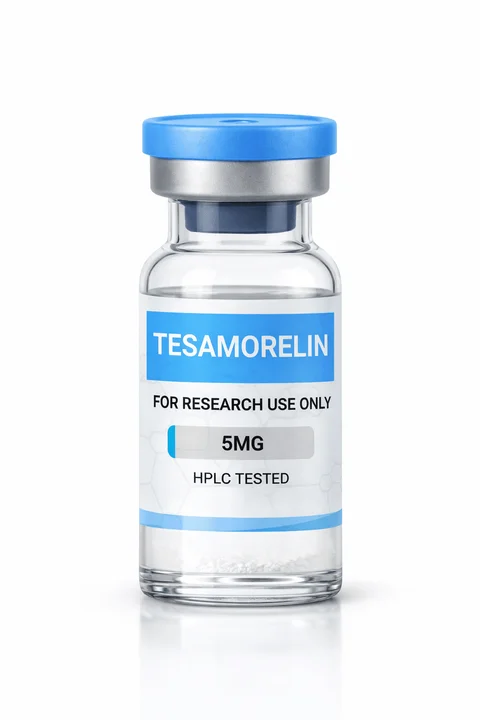
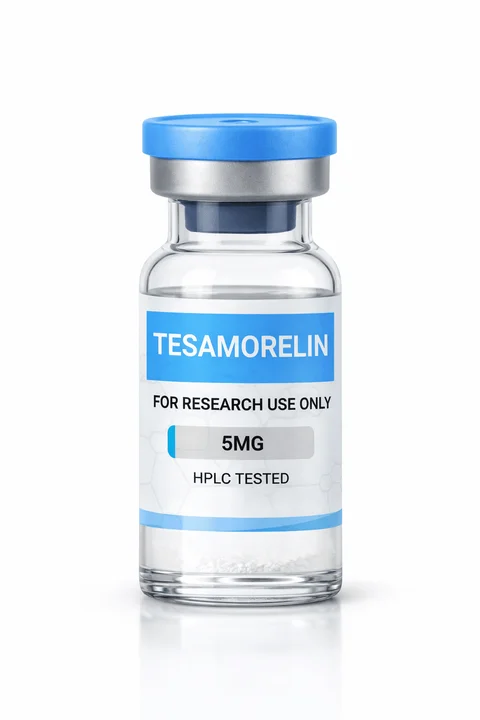
Professional laboratories in Italy, Germany, and the UK require maximum chemical purity for valid experimental data. High-quality Tesamorelin usually arrives as a white lyophilized powder with a purity of 99% or higher. You must store the unmixed vials in a refrigerator between 2°C and 8°C, protected from light. After you reconstitute it with the provided diluent (usually Sterile Water for Injection), the solution must be used immediately; any remaining reconstituted peptide should be discarded as it does not contain preservatives. Handle the vial gently and do not freeze the reconstituted solution. These strict protocols guarantee accurate results for your metabolic and endocrinology signaling studies.
Reviews
There are no reviews yet.