
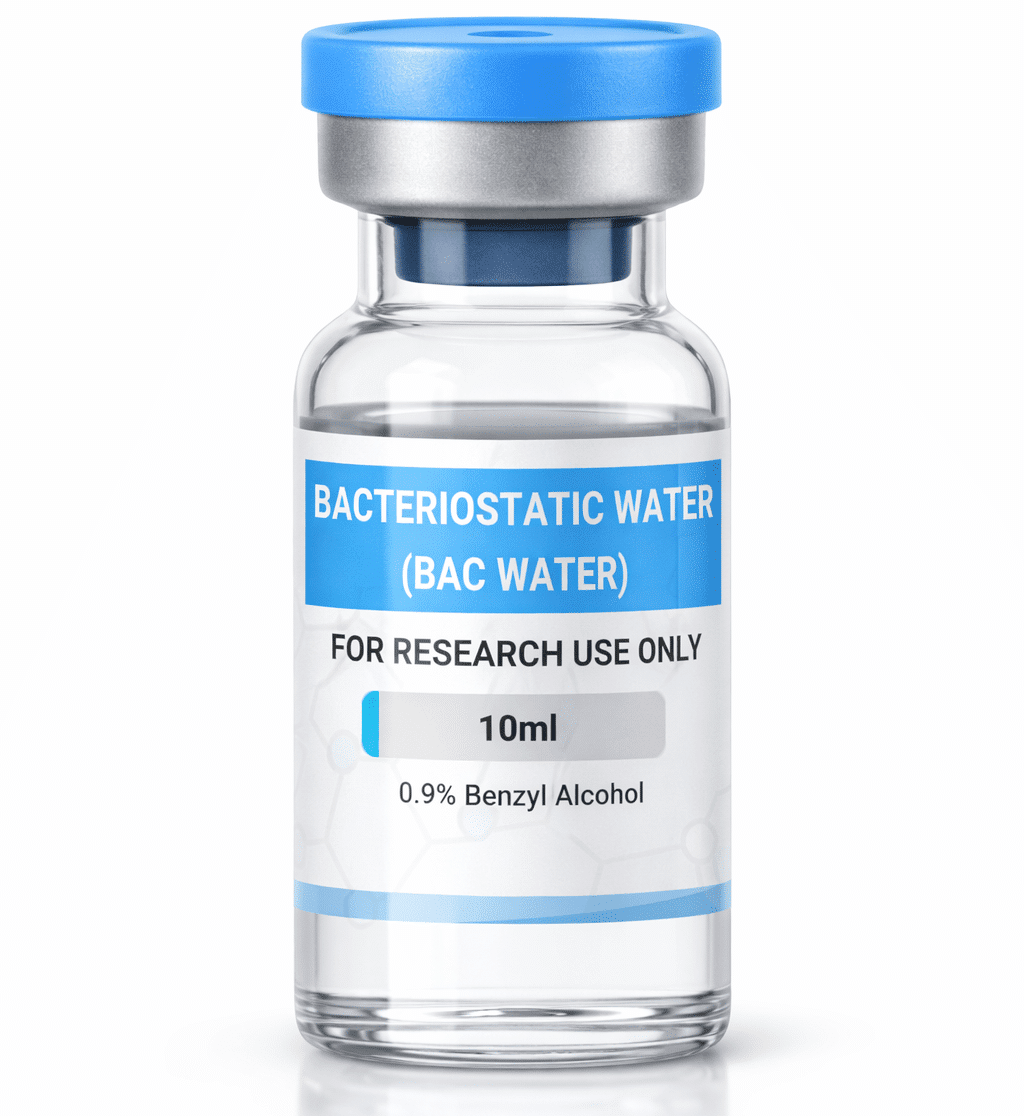
What is Bacteriostatic Water?
Bacteriostatic Water for Injection is a sterile, non-pyrogenic preparation of distilled water containing 0.9% benzyl alcohol () as a preservative. Unlike standard sterile water, which must be discarded immediately after a single use, the addition of benzyl alcohol allows for multiple entries into the vial. The preservative effectively inhibits the growth and reproduction of most potentially contaminating bacteria. Consequently, researchers in the UK, USA, and Australia rely on bacteriostatic water as the gold standard for reconstituting delicate lyophilized peptides and proteins intended for laboratory studies.
The Role of 0.9% Benzyl Alcohol Of Bacteriostatic Water for Injection
The specific concentration of benzyl alcohol is critical for maintaining the stability of the solution without denaturing the sensitive peptide chains. The bacteriostatic agent works by disrupting the cellular membranes of bacteria, preventing them from multiplying within the vial. Once a vial of research peptide is reconstituted with this water, it can typically be stored in a refrigerated environment for up to 28 days. This extended shelf life is a vital requirement for scientists in Germany and France who perform longitudinal studies requiring multiple precise dosages from a single source.
Reconstitution and Peptide Stability
Proper reconstitution is essential to preserve the biological activity of research compounds. When adding bacteriostatic water to a lyophilized powder, the liquid should be aimed at the side of the glass vial and allowed to trickle down slowly. This “gentle melt” method prevents the mechanical shearing of the peptide bonds that can occur with high-pressure contact. Researchers in Spain and the USA emphasize that once the water is added, the vial should be swirled gently rather than shaken. Maintaining this level of care ensures that the molecular integrity remains intact for accurate experimental results.
Storage and Handling Protocols Of Bacteriostatic Water for Injection
To ensure the longevity of the bacteriostatic water itself, it should be stored in a cool, dry place away from direct sunlight, ideally at room temperature between 15°C and 30°C. Once the seal is broken and the first withdrawal is made, the vial must be labeled with the date of opening. Following the 28-day window, any remaining liquid should be disposed of in accordance with laboratory safety regulations to avoid the risk of contamination. For laboratories in Australia and Germany, adhering to these strict timing protocols is a fundamental aspect of Good Laboratory Practice (GLP).
Important Safety and Research Constraints
While bacteriostatic water is the preferred solvent for many research applications, it is important to note that it is not suitable for all uses. Because of the benzyl alcohol content, it should never be used in neonatal research or for certain types of neurological injections where preservative-free solutions are required. Furthermore, some specific peptides may be sensitive to the pH levels of the preservative. Researchers in the UK and France are encouraged to consult the specific solubility and stability profiles of their compounds before selecting their reconstitution medium.
Reviews
There are no reviews yet.