
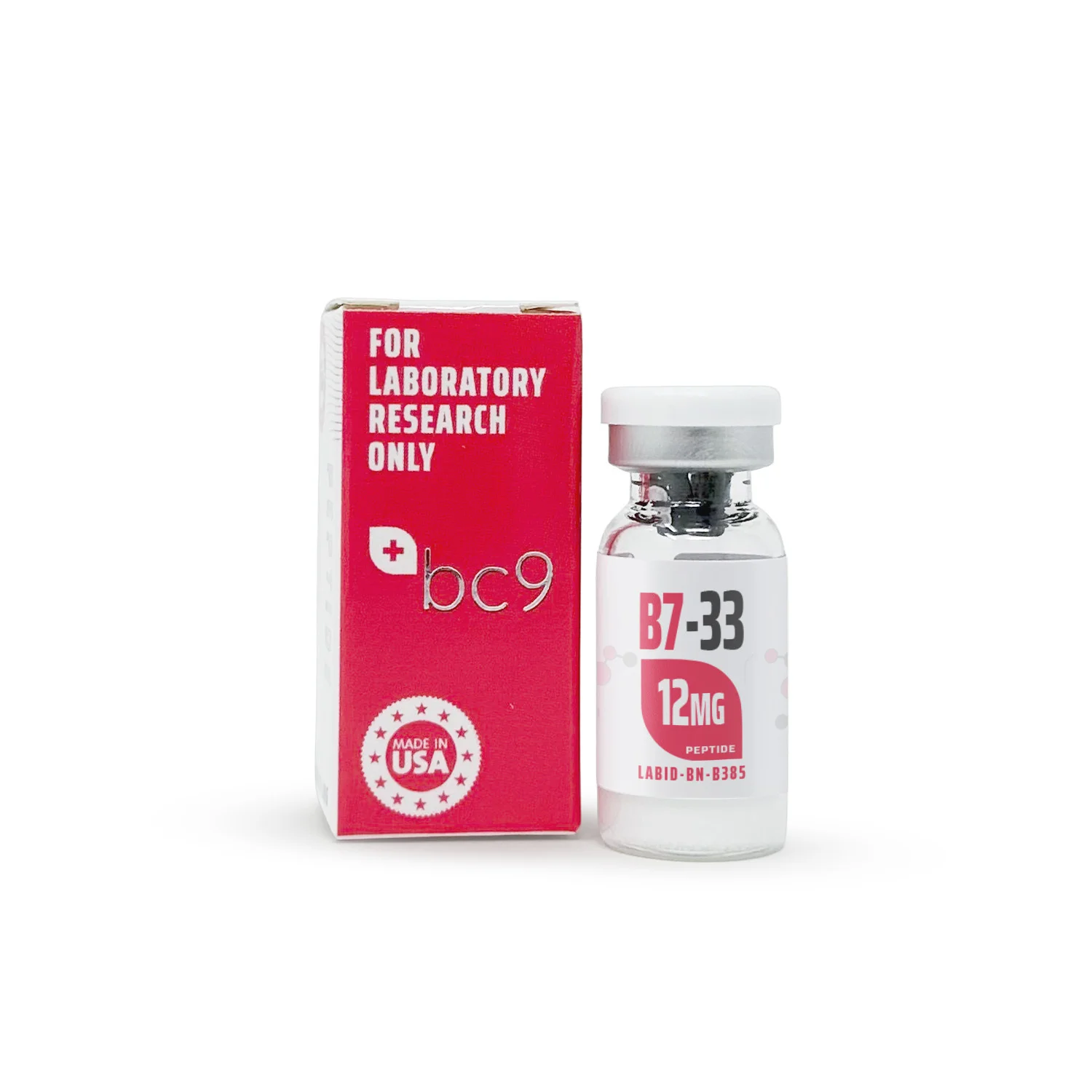
What is B7-33?
B7-33 Peptide is a synthetic, single-chain peptide derived from the B-chain of human relaxin-2. Scientists engineered this compound to replicate the potent anti-fibrotic and vasodilatory effects of the natural hormone while overcoming its structural complexity. Native relaxin-2 is a two-chain, three-disulfide-bond peptide that is notoriously difficult and expensive to synthesize. By isolating a specific 27-amino acid sequence and adding a solubilizing C-terminal tail, researchers created a highly stable, water-soluble analog. Consequently, B7-33 has become a primary subject for laboratories in the UK, USA, and Australia investigating modern treatments for heart failure and chronic organ scarring.
Mechanism: Selective RXFP1 Activation
Unlike the parent hormone, B7-33 is a “functionally selective” agonist of the Relaxin Family Peptide Receptor 1 (RXFP1). While natural relaxin activates both the cAMP and pERK pathways, B7-33 specifically triggers the pERK (extracellular signal-regulated kinase) pathway without significantly increasing cAMP levels. This selectivity is crucial because excessive cAMP activation in certain contexts can theoretically promote unwanted cardiac side effects. By focusing on the pERK pathway, B7-33 stimulates the production of matrix metalloproteinases (MMPs), which are enzymes responsible for breaking down excess collagen. Therefore, it provides a more refined tool for reversing established fibrosis.
Breakthroughs in Cardiovascular and Pulmonary Fibrosis
The most significant research application for B7-33 lies in its ability to reverse adverse cardiac remodeling following a myocardial infarction (heart attack). Pre-clinical studies in the USA and Germany have demonstrated that the peptide can reduce heart tissue fibrosis by up to 50%, significantly improving overall cardiac function. Furthermore, the peptide shows immense promise in treating pulmonary fibrosis and chronic kidney disease by preventing the transformation of healthy fibroblasts into scar-forming myofibroblasts. Because it addresses the structural cause of organ failure—collagen buildup—it represents a paradigm shift in regenerative medicine.
Vasoprotective Effects and Preeclampsia Research Of B7-33 Peptide
In addition to its anti-fibrotic properties, B7-33 replicates the vasoprotective functions of serelaxin. Research conducted in Australia and France suggests that the peptide enhances endothelium-dependent relaxation in blood vessels, improving systemic circulation. This has led to specialized studies exploring B7-33 as a potential treatment for preeclampsia, a condition characterized by high blood pressure during pregnancy. By restoring healthy vascular function and reducing oxidative stress, the peptide may help protect both maternal and fetal health in experimental models of gestational hypertension.
Global Sourcing and Laboratory Purity Standards
For professional laboratories in Spain, Germany, and the UK, maintaining the highest chemical purity is vital for reproducible data. B7-33 is typically supplied as a lyophilized powder with a purity level exceeding 95%, often verified via HPLC and Mass Spectrometry. To ensure long-term stability, researchers should store the peptide at -20°C. Once reconstituted with bacteriostatic or sterile water, it should be kept refrigerated and used within a short timeframe to prevent degradation. Following these strict handling protocols allows scientists to accurately explore the therapeutic potential of this versatile relaxin mimetic.


Reviews
There are no reviews yet.