
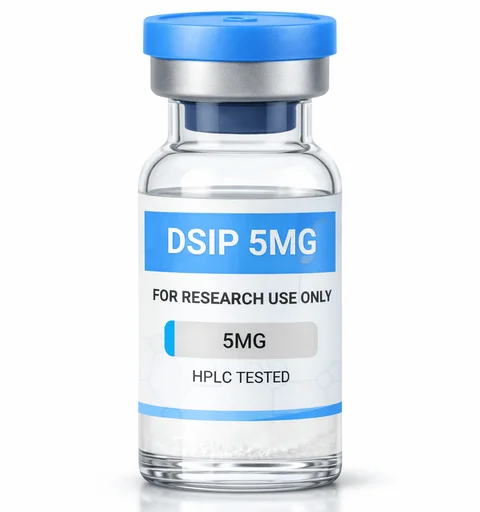
What is DSIP (DS)?
DSIP (DS) Peptide, or Delta Sleep-Inducing Peptide, is a naturally occurring nonapeptide first isolated from the cerebral venous blood of rabbits in a state of deep sleep. It consists of nine amino acids and primarily targets the central nervous system to modulate sleep-wake cycles. Unlike traditional sedative drugs, DSIP does not act as a direct anesthetic; instead, it promotes the onset of deep, restorative sleep by mimicking natural physiological triggers. Consequently, researchers in the UK, USA, and Australia utilize DSIP to study its impact on the duration and quality of slow-wave sleep. This peptide serves as a primary tool for investigating the complex biochemical pathways that govern circadian rhythms and nocturnal recovery.
Mechanism: Delta-Wave Induction and Neuromodulation
DSIP functions by crossing the blood–brain barrier and interacting with specific receptors in the thalamus and hypothalamus. It specifically targets the induction of delta-wave activity, which characterizes the deepest stages of non-REM sleep. Furthermore, the peptide acts as a neuromodulator that influences the levels of serotonin and dopamine within the brain. This action helps stabilize neural activity and reduces the excitability associated with chronic stress. Therefore, it serves as a critical tool in Germany and Canada for investigating neuro-homeostasis. This precise molecular action helps researchers observe the transition from wakefulness to high-quality sleep in various laboratory models.
Breakthroughs in Stress Resilience and Endocrine Health With DSIP (DS) Peptide
The most significant research application for DSIP involves its ability to mitigate the physiological markers of stress. Scientific studies in the USA and Spain indicate that the peptide can lower basal corticotropin levels and inhibit cortisol secretion. Researchers observe that DSIP helps protect the body against the harmful effects of acute emotional and physical pressure. Additionally, the peptide demonstrates the ability to stimulate the release of luteinizing hormone (LH) and growth hormone (GH) during sleep. This multifaceted approach makes it a high-priority compound for studying endocrine regulation and metabolic recovery. Thus, it remains a primary focus for sleep science research in Italy and France.
Neuroprotection and Antioxidant Properties
Researchers frequently study DSIP for its potential neuroprotective and antioxidant effects. The peptide enhances the activity of superoxide dismutase (SOD) and other enzymes that neutralize free radicals in neural tissue. Moreover, DSIP influences the stability of cell membranes, helping to prevent damage caused by oxidative stress or toxic accumulation. This makes it particularly valuable for investigating age-related cognitive decline and the recovery of the central nervous system following injury. Consequently, biotech firms in Spain and Germany prioritize it for research into the preservation of long-term brain health. These findings highlight the peptide’s potential for maintaining functional integrity during high-stress environmental conditions.
Quality Standards and Laboratory Handling
Professional laboratories in Italy, Germany, and the UK require maximum chemical purity for valid experimental data. High-quality DSIP usually arrives in a lyophilized (freeze-dried) state with a purity of 98% or higher. You must store the vial in a freezer at -20°C to ensure long-term molecular stability. After you reconstitute it with bacteriostatic water or a specialized sterile solution, keep the solution refrigerated between 2°C and 8°C. Handle the vial gently to prevent the degradation of the delicate nine-amino acid sequence. These strict protocols guarantee accurate results for your neurobiology and circadian rhythm studies.

Reviews
There are no reviews yet.