
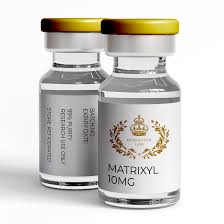
Understanding Matrixyl (MX10) Peptide Research
Matrixyl (MX10), featuring the active palmitoyl pentapeptide-4, is a foundational research peptide in the field of tissue regeneration and structural protein synthesis. It is specifically designed to mimic the natural breakdown products of collagen, signaling the body to initiate repair processes. Researchers study Matrixyl (MX10) for its profound ability to stimulate the synthesis of collagen types I, III, and IV, as well as fibronectin and glycosaminoglycans. Consequently, it has become a primary focus for investigators exploring advanced interventions for structural rejuvenation and extracellular matrix (ECM) optimization.
The Mechanism of Collagen Synthesis and Repair
This peptide works by acting as a “matrikine”—a messenger molecule that regulates cell activity. When Matrixyl (MX10) binds to specific cell surface receptors, it triggers a cascade of biochemical signals that activate fibroblasts, the primary cells responsible for producing structural proteins. By enhancing the production of the dermal matrix, it helps restore structural integrity and elasticity within connective tissues. Furthermore, it assists in modulating the inflammatory response during tissue repair, ensuring a balanced environment for new protein formation. As a result, Matrixyl (MX10) provides a robust physiological stimulus for maintaining the structural framework of biological research models.
Key Benefits for Structural Integrity and Longevity
One of the primary advantages of studying Matrixyl (MX10) involves its consistent ability to improve the density and organization of the extracellular matrix in research models. Moreover, it supports tissue resilience by optimizing the ratio of collagen to elastin, which is essential for maintaining functional flexibility. Users frequently report a measurable reduction in structural degradation and an improved rate of tissue recovery during long-term research observations. Therefore, it serves as a foundational tool for investigators seeking to optimize research into biological longevity and structural health.
Scientific Research and Clinical Observations
Clinical studies indicate that messenger peptides like Matrixyl (MX10) exhibit high biological activity and a well-documented impact on protein expression in laboratory settings. Scientists have observed that consistent application can lead to a significant increase in the volume of the dermal matrix and improved structural outcomes in models of tissue aging. Additionally, the data suggests that Matrixyl (MX10) effectively supports the body’s natural resilience against environmental stressors and oxidative damage. Thus, the scientific community continues to prioritize Matrixyl (MX10) in the development of next-generation regenerative therapies.
Usage Guidelines and Research Applications
For research purposes, Matrixyl (MX10) is typically provided in a high-purity lyophilized form to ensure maximum biological activity and stability. Investigators must follow precise reconstitution and dosing protocols to achieve accurate results in physiological and structural studies. It is crucial to store the peptide at controlled temperatures to prevent the degradation of its palmitoylated peptide sequence. Consequently, maintaining a standardized laboratory environment remains essential for observing the true biological impact of the peptide.
Why Choose Matrixyl (MX10) for Advanced Research
Choosing Matrixyl (MX10) offers a sophisticated approach to structural health that targets the brain’s natural repair signals. Because it mimics the body’s own regenerative pathways, it offers a more physiological method for enhancing tissue integrity compared to external fillers. In addition to its collagen-boosting properties, it provides a protective effect on the extracellular matrix and supports overall metabolic structural integrity. Ultimately, Matrixyl (MX10) stands out as a premier choice for advanced research into tissue rejuvenation and biological optimization.
Conclusion on Matrixyl (MX10) Efficacy
In summary, Matrixyl (MX10) provides a sophisticated and effective method for enhancing structural function through targeted matrikine signaling. Its ability to promote collagen synthesis, stabilize the extracellular matrix, and protect against structural decline makes it a cornerstone of modern regenerative research. By integrating this peptide into a research protocol, one can expect a higher standard of structural care and performance. Therefore, it remains a highly recommended product for those prioritizing long-term tissue health and structural excellence.

Reviews
There are no reviews yet.