
What is KPV (KP)?
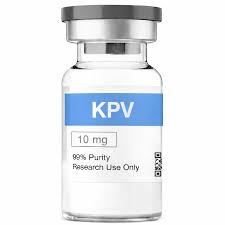
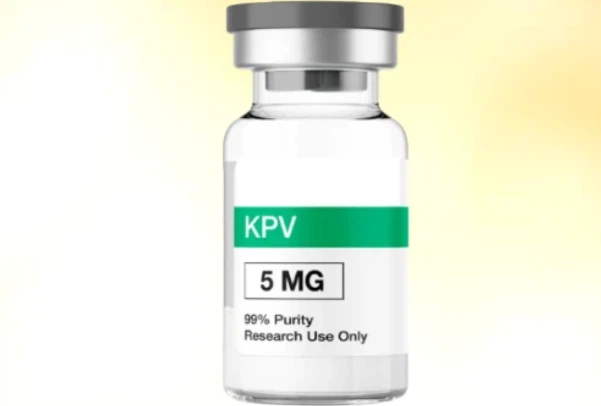
KPV (KP) Peptide is a naturally occurring tripeptide consisting of Lysine, Proline, and Valine. It represents the C-terminal fragment of the alpha-melanocyte-stimulating hormone (-MSH). Despite its small size, this peptide possesses potent biological activity without the pigmentary effects of its parent hormone. Consequently, researchers in the UK, USA, and Australia study KPV for its significant anti-inflammatory and antimicrobial properties. This molecule serves as a primary tool for investigating targeted immune responses within various biological systems.
Mechanism: NF-κB Inhibition and Cytokine Regulation
KPV functions primarily by inhibiting the activation of the NF-κB signaling pathway. This protein complex acts as a master regulator of the body’s inflammatory response. By entering the cell nucleus, KPV prevents the production of pro-inflammatory cytokines like TNF-, IL-1$\beta$, and IL-6. Furthermore, the peptide interacts with the MC1R receptor to modulate local immune activity. Therefore, it serves as a critical tool in Germany and Canada for investigating cellular homeostasis. This precise molecular action helps researchers observe the reduction of chronic inflammation in laboratory models.
Breakthroughs in Gut Health and IBD Research Of KPV (KP) Peptide
The most significant research application for KPV involves its impact on the intestinal lining. Scientific studies in the USA and Spain indicate that the peptide effectively reduces colonic inflammation. Researchers observe that KPV can be transported directly into intestinal cells to accelerate mucosal healing. Additionally, the peptide demonstrates antimicrobial activity against common pathogens like Staphylococcus aureus and Candida albicans. This dual-action approach makes it a high-priority compound for studying Inflammatory Bowel Disease (IBD). Thus, it remains a primary focus for gastroenterology research in Italy.
Quality Standards and Laboratory Handling
Professional laboratories in Italy, Germany, and the UK require maximum chemical purity for valid experimental data. High-quality KPV usually arrives in a lyophilized state with a purity of 98% or higher. You must store the vial in a freezer at -20°C to ensure long-term molecular stability. After you reconstitute it with bacteriostatic water or a specialized saline solution, keep it refrigerated. Handle the vial gently to prevent the degradation of the tripeptide sequence. These strict protocols guarantee accurate results for your immunology and regenerative medicine studies.
Reviews
There are no reviews yet.