
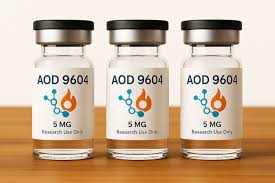
Explore AOD9604 (AOD/AD), the powerful HGH fragment targeting fat metabolism. Learn about its role in lipolysis and visceral fat reduction in the UK, USA, and Australia.
What is AOD9604 (AOD/AD)?
AOD9604 Peptide, often abbreviated in research circles as AOD or AD, is a synthetic peptide fragment derived from the C-terminal end of human growth hormone (hGH). Specifically, it encompasses amino acids 176–191 with a stabilizing tyrosine modification. Unlike full-length growth hormone, this fragment was engineered to isolate the fat-burning properties of the hormone without triggering undesirable systemic effects like muscle growth or insulin resistance. Consequently, researchers in the USA, Australia, and the UK prioritize this peptide for its highly selective action on adipose tissue metabolism.
Targeted Lipolysis and Fat Reduction
The primary mechanism of AOD9604 involves the stimulation of lipolysis (the breakdown of stored fat) and the inhibition of lipogenesis (the formation of new fat cells). By activating beta-3 adrenergic receptors, the peptide encourages the body to release fatty acids from adipocytes for energy utilization. Furthermore, scientific studies indicate that its effects are particularly pronounced in areas containing high concentrations of stubborn visceral fat. Therefore, it serves as a critical subject for laboratories in France and Spain investigating targeted solutions for metabolic health and body composition optimization.
Metabolic Safety and Glucose Regulation of AOD9604 Peptide
One of the most clinically significant features of AOD9604 is its exceptional metabolic safety profile. Unlike the parent hGH molecule, this fragment does not bind to growth hormone receptors and does not raise IGF-1 levels. Furthermore, research across Germany and the USA has demonstrated that chronic administration does not negatively impact blood sugar levels or insulin sensitivity. This unique profile makes it a preferred compound for studying fat loss in populations where maintaining stable carbohydrate metabolism is a primary concern.
Cartilage Repair and Regenerative Potential
While primarily known for its metabolic applications, emerging research suggests that AOD9604 may also play a role in cartilage repair and joint health. Some exploratory trials in Australia have observed that the peptide promotes the regeneration of chondrocytes and reduces inflammation within damaged tissues. Consequently, it is increasingly being studied in the context of osteoarthritis and sports-related injury recovery. These multifaceted benefits allow scientists in the UK and beyond to explore a broader range of regenerative applications for this versatile peptide fragment.
Sourcing and Research Standards in the UK
When sourcing AOD9604 for international research, maintaining the highest laboratory purity is essential for obtaining consistent data. High-quality vials typically contain a lyophilized powder that undergoes HPLC and Mass Spectrometry testing to verify its molecular integrity. To preserve the peptide’s potency, you must store it in a cool, dark environment—ideally refrigerated between 2°C and 8°C. Following these strict handling and reconstitution protocols ensures that researchers in Germany, France, and Spain can accurately observe the biological impact of the peptide throughout their studies.


Reviews
There are no reviews yet.